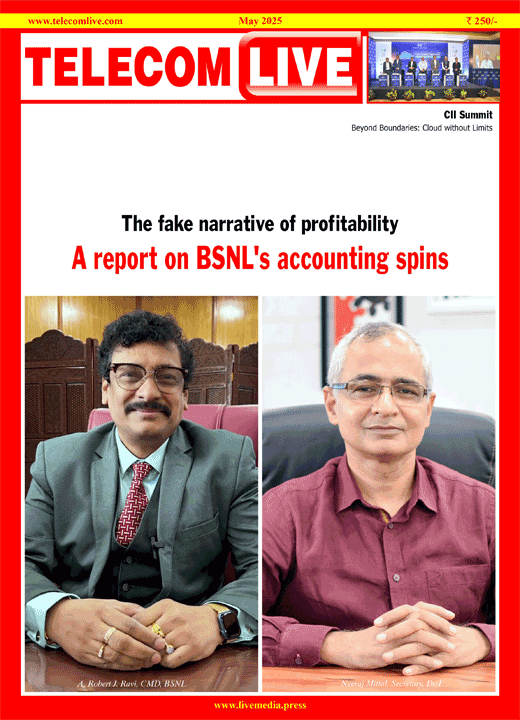
Our cover story is about BSNL’s accounting methods, audit redflags which reveal that BSNL’s reported profits are not performance based but managed by changing audit methods and also at times misreporting.
In FY 2025, BSNL effected a change in its method of amortisation of spectrum fees from Straight Line Method (SLM) to the Unit Based Amortization Method (UBAM). The result: Expense reduction by Rs 782 crore. There was more.
In Q3, BSNL short-funded its obligation towards employee retirement benefits namely gratuity by Rs 414 crore and by Rs 122 crore towards leave encashment. It also capitalised some of the employee expenses - an accounting practice called Capital work in Progress (CWIP) where a cost is recorded as an asset rather than an expense, this resulted in an accounting benefit of Rs 302 crore. Auditors found that BSNL’s income increases for the quarter included excess provision to the tune of Rs 285 crore. All this measures yielded what BSNL was desperately seeking to show – profitability. And for the first time since 2007 in Q3, FY25, BSNL was able to show a gain of Rs 262 crore.
Similar tactics were employed and amplified for Q4, FY25. A long list. Amortization changes for spectrum fees created an impact of Rs 1,186 crore. Writing back excess provisions of Rs 711 crore, short funding employee expense by Rs 501 crore towards gratuity, and Rs 82 crore towards leave encashment. CWIP of Rs 1,032 crore. Steps like these have led to reporting a net profit of Rs 280 crore in Q4.
There are other serious issues of fund utilization for government projects that the auditors have specified. Plus the non-reconciliation of big amounts.